


 Germany
Germany
Germany
 Interactive data profiles:
 |
|
|
|
|
|
|
|
|
|
|
|
|
|
|
|
|
|
|
|
|
|
|
|
|
|
|
|
|
|
|
|
|
|
|
|
|
|
|
|
|
|
|
|
|
|
|
|
|
|
|
|
|
|
|
|
|
|
|
|
|
|
|
|
|
|
|
|
|
|
|
|
|
|
|
|
|
|
|
|
|
|
|
|
|
|
|
|
|
|
|
|
|
|
|
|
|
|
|
|
|
|
|
|
|
|
|
|
|
|
|
|
|
|
|
|
|
|
|
|
|
|
|
|
|
|
|
|
|
|
|
|
|
|
|
|
|
|
|
|
|
|
|
|
|
|
|
|
|
|
|
|
|
|
|
|
|
|
|
|
|
|
|
|
|
|
|
|
|
|
|
|
|
|
|
|
|
|
|
|
|
|
|
|
|
|
|
|
|
|
|
|
|
|
|
|
|
|
|
|
|
|
|
|
|
|
|
|
|
|
|
|
|
|
|
|
|
|
|
|
|
|
|
|
|
|
|
|
|
|
|
|
|
|
|
|
|
|
|
|
|
|
|
|
|
|
|
|
|
|
|
|
|
|
|
|
|
|
|
|
|
|
|
|
|
|
|
|
|
|
|
|
|
|
|
|
|
|
|
|
|
|
|
|
|
|
|
|
|
|
|
|
|
|
|
|
|
|
|
|
|
|
|
|
|
|
|
|
|
|
|
|
|
|
|
|
|
|
|
|
|
|
|
|
|
|
|
|
|
|
|
|
|
|
|
|
|
|
|
|
|
|
|
|
|
|
|
|
|
|
|
|
|
|
|
|
|
|
|
|
|
|
|
|
|
|
|
|
|
|
|
|
|
|
|
|
|
|
|
|
|
|
|
|
|
|
|
|
|
|
|
|
|
|
|
|
|
|
|
|
|
|
|
|
|
|
|
|
|
|
|
|
|
|
|
|
|
|
|
|
|
|
|
|
|
|
|
|
|
|
|
|
|
|
|
|
|
|
|
|
|
|
|
|
|
|
|
|
|
|
|
|
|
|
|
|
|
|
|
|
|
|
|
|
|
|
|
|
|
|
|
|
|
|
|
 Country reports and publications
Germany
ECEC staff, leaders and their working conditions (Starting Strong Survey 2024)
* Estimates for the Flemish Community of Belgium (in ISCED 01), Germany, Ireland, Norway, New Brunswick (Canada) and Quebec (Canada) should be interpreted with caution due to higher risk of non-response bias. Data from New Zealand only represent respondents included in the sample and not the population targeted by the survey.
| Results from TALIS Starting Strong 2024: Strengthening Early Childhood Education and Care | Country Note | Starting Strong Survey 2024 Conceptual Framework | Education policies: Teachers |

Select first some countries to compare, choose the charts you wish to display and customise them.
The following list displays indicators for which your selected country shows the highest and lowest values among countries.
The list can be sorted by level of education or by age group. All rankings are calculated including available data from OECD
and partner countries.
Find out more about the methodology here.
Show indicators for which your country ranks among the top or bottom:
Sort by:
ECEC centre external evaluations
In Germany, the percentage of pre-primary leaders who reported receiving external inspection or monitoring of staff practices by trained observers less than every two years or never was among the highest across countries with available data. (73.5 %, rank 4/14 , 2024) Download Indicator
In Germany, the percentage of leaders in settings for children under 3 who reported receiving external inspection or monitoring of staff practices by trained observers less than every two years or never was among the highest across countries with available data. (72.8 %, rank 2/7 , 2024) Download Indicator
Who the ECEC staff are
The share of pre-primary settings in Germany that employ staff representative of the diverse backgrounds of the children and families served was among the smallest across countries with available data. (55.2 %, rank 11/14 , 2024) Download Indicator
Education and initial preparation of ECEC staff
|The percentage of staff in settings for children under 3 in Germany whose highest level of education is above secondary level (ISCED Level 4 or higher) was among the highest across countries with available data. (86.5 %, rank 2/7 , 2024) Download Indicator
Professional development of ECEC staff
The proportion of pre-primary staff in Germany whose professional development over the previous 12 months included working with children with special needs was among the lowest across countries with available data. (29.2 %, rank 14/14 , 2024) Download Indicator
In Germany, the percentage of pre-primary staff who participated in job-embedded training and collaborative learning activities during the 12 months prior to the survey was among the lowest across countries with available data. (58 %, rank 12/14 , 2024) Download Indicator
In Germany, the share of pre-primary staff who received release from work with children during regular working hours to participate in professional development was among the highest across countries with available data. (74.1 %, rank 1/14 , 2024) Download Indicator
The proportion of staff in settings for children under 3 in Germany whose professional development over the previous 12 months included working with children with special needs was among the lowest across countries with available data. (22.1 %, rank 7/7 , 2024) Download Indicator
In Germany, the percentage of staff in settings for children under 3 who participated in job-embedded training and collaborative learning activities during the 12 months prior to the survey was among the highest across countries with available data. (54.7 %, rank 5/7 , 2024) Download Indicator
In Germany, the share of staff in settings for children under 3 who received release from work with children during regular working hours to participate in professional development was among the highest across countries with available data. (75.4 %, rank 1/7 , 2024) Download Indicator
Professional development of ECEC leaders
The percentage of pre-primary leaders in Germany who received coaching in the 12 months prior to the survey was among the highest across countries with available data. (40.8 %, rank 3/13 , 2024) Download Indicator
The percentage of leaders in settings for children under 3 in Germany who received coaching in the 12 months prior to the survey was among the highest across countries with available data. (36.9 %, rank 1/6 , 2024) Download Indicator
Teaching students with special needs
In Germany, the proportion of pre-primary staff reporting a strong level of need for additional budget and training resources to support children with special education needs was among the lowest across countries with available data. (81 %, rank 11/14 , 2024) Download Indicator
In Germany, the proportion of staff in settings for children under 3 reporting a strong level of need for additional budget and training resources to support children with special education needs was among the lowest across countries with available data. (81.4 %, rank 6/7 , 2024) Download Indicator
ECEC staff practices
In Germany, the share of pre-primary staff who adapted activities in response to children's natural rhythms on at least a daily basis was among the lowest across countries with available data. (52.1 %, rank 12/14 , 2024) Download Indicator
In Germany, the percentage of total working time that pre-primary staff spent in direct contact with children was among the highest across countries with available data. (87.5 %, rank 3/14 , 2024) Download Indicator
In Germany, the share of staff in settings for children under 3 who adapted activities in response to children's natural rhythms on at least a daily basis was among the lowest across countries with available data. (61.5 %, rank 7/7 , 2024) Download Indicator
The share of settings for children under 3 in Germany where consultation with child development specialists takes place at least monthly was among the largest across countries with available data. (33.2 %, rank 2/7 , 2024) Download Indicator
In Germany, the percentage of total working time that staff in settings for children under 3 spent in direct contact with children was among the highest across countries with available data. (87.2 %, rank 1/7 , 2024) Download Indicator
Practices with other ECEC staff and parents or guardians
In Germany, the percentage of pre-primary staff reporting that parents or guardians are encouraged by staff to do play and learning activities with their children at home was among the lowest across countries with available data. (68 %, rank 12/14 , 2024) Download Indicator
In Germany, the percentage of staff in settings for children under 3 reporting that parents or guardians are encouraged by staff to do play and learning activities with their children at home was among the lowest across countries with available data. (63.3 %, rank 7/7 , 2024) Download Indicator
The proportion of staff in settings for children under 3 in Germany who co-designed activities or content for children’s development, well-being and learning with colleagues at least monthly was among the highest across countries with available data. (77.8 %, rank 5/7 , 2024) Download Indicator
ECEC staff practices facilitating literacy, numeracy and language development
In Germany, the share of pre-primary staff who reported reading books to children once a day or more during the most recent complete calendar week was among the lowest across countries with available data. (45.9 %, rank 12/14 , 2024) Download Indicator
In Germany, the share of staff in settings for children under 3 who reported reading books to children once a day or more during the most recent complete calendar week was among the lowest across countries with available data. (53.3 %, rank 7/7 , 2024) Download Indicator
ECEC staff practices facilitating socio-emotional development
The proportion of pre-primary staff in Germany who reported helping children express their feelings at least once a day during the most recent complete calendar week was among the lowest across countries with available data. (60.4 %, rank 14/14 , 2024) Download Indicator
The proportion of staff in settings for children under 3 in Germany who reported helping children express their feelings at least once a day during the most recent complete calendar week was among the lowest across countries with available data. (60.3 %, rank 7/7 , 2024) Download Indicator
ECEC leaders' practices
The share of pre-primary leaders in Germany who provide feedback to staff based on their observations weekly or more often was among the largest across countries with available data. (54.6 %, rank 4/14 , 2024) Download Indicator
ECEC staff job satisfaction
In Germany, the percentage of staff in settings for children under 3 who reported being all in all satisfied with their job was among the lowest across countries with available data. (87.2 %, rank 6/7 , 2024) Download Indicator
In Germany, the share of staff in settings for children under 3 who reported being “likely” or “very likely” to leave their staff role to attend to family responsibilities was among the largest across countries with available data. (36.7 %, rank 5/7 , 2024) Download Indicator
ECEC leaders' job satisfaction
The percentage of pre-primary leaders in Germany reporting that staff absences hinder their capacity to provide a quality environment for children “quite a bit” or “a lot” was among the highest across countries with available data. (77.3 %, rank 1/14 , 2024) Download Indicator
In Germany, the proportion of pre-primary setting leaders who “agree” or “strongly agree” that they need more support from local, municipal/regional, state or national/federal authorities was among the smallest across countries with available data. (58.8 %, rank 11/14 , 2024) Download Indicator
The percentage of leaders in settings for children under 3 in Germany reporting that staff absences hinder their capacity to provide a quality environment for children “quite a bit” or “a lot” was among the highest across countries with available data. (77.4 %, rank 1/7 , 2024) Download Indicator
In Germany, the proportion of pre-primary setting leaders who “agree” or “strongly agree” that they need more support from local, municipal/regional, state or national/federal authorities was among the smallest across countries with available data. (57.6 %, rank 6/7 , 2024) Download Indicator
Working conditions of ECEC staff
The percentage of pre-primary staff in Germany who reported that having extra duties due to absent staff is a source of stress “quite a bit” or “a lot” was among the highest across countries with available data. (73.5 %, rank 1/14 , 2024) Download Indicator
The percentage of staff in settings for children under 3 in Germany who reported that having extra duties due to absent staff is a source of stress “quite a bit” or “a lot” was among the highest across countries with available data. (77.4 %, rank 1/7 , 2024) Download Indicator
The percentage of staff in pre-primary settings in Germany who reported to experience stress at work “quite a bit” or “a lot” was among the highest across countries with available data. (76.3 %, rank 1/16 , 2024) Download Indicator
The data table will display up to six selected countries.
General findings
- Public and private ECEC settings are unevenly distributed. Public settings are more common in rural areas and in neighbourhoods perceived as less favourable by leaders in several countries and subnational entities.
- In many systems, leaders in public settings report facing more challenges than their counterparts in private settings including a higher proportion of vulnerable children (e.g., from socio-economically disadvantaged homes), less adequate physical space (e.g., poor ventilation, high background noise), and less communication with families.
Visualisations
Click the arrow sign next to the title:
 to display other variables
to display other variables
Click the arrow sign next to the title:
to display other variables
to display other variables
Click the arrow sign next to the title:
to display other variables
to display other variables
- ECEC staff activities support child development, with a particular emphasis on social and emotional growth. Practices like encouraging children to help each other and express their feelings are used daily by a majority of ECEC staff in all countries and subnational entities.
- ECEC staff spend most of their time in direct contact with children, though this varies widely between survey participants. – from 68% in Colombia to 90% in Denmark. Notably, if staff work longer hours this does not necessarily mean they spend more time with children.
- Engaging in other tasks while in contact with children is common in all systems. However, some staff lack dedicated time for tasks not involving children. Planning or preparing activities alone is the work-related task consistently associated with staff reporting they work longer hours.
Visualisations
Click the arrow sign next to the title:
to display other variables
to display other variables
Click the arrow sign next to the title:
to display other variables
to display other variables
Click the arrow sign next to the title:
to display other variables
to display other variables
- Most ECEC staff are trained to work with children. They have at least post-secondary education (ISCED Level 4 or higher), with rates ranging from 87% in settings for children under age 3 in Israel to 99% in pre-primary settings in Spain and Türkiye.
- Ongoing professional development is often limited to courses and seminars. These formats are used by over 60% of staff across all countries and subnational entities. More effective formats, such as job-embedded training and collaborative learning approaches (e.g., coaching or induction), are less common.
- Staff report a strong need for additional budget and training resources to support children with special education needs.
| Education policies: Teacher initial education | Education policies: Teacher professional development | Education policies: School leader preparation and development |
Visualisations
Click the arrow sign next to the title:
to display other variables
to display other variables
Click the arrow sign next to the title:
to display other variables
to display other variables
Click the arrow sign next to the title:
to display other variables
to display other variables
- Job satisfaction among ECEC staff and leaders is high. Over 90% of staff in most countries and subnational entities report they are satisfied and feel valued by parents and children.
- The percentage of staff reporting work-related stress varies substantially across systems. It ranges from under 20% in pre-primary education in Colombia and Israel to over 75% in Germany, in both levels of ECEC. In many countries and subnational entities, having too many tasks at the same time and performing extra duties are top sources of stress.
- Leaders identify staff absences and shortages as the main barrier to providing quality environments for children. Staff also report that a lack of substitutes is a major barrier to participation in professional development activities.
| Education policies: Teacher working conditions | Education policies: School leader working conditions |
Visualisations
Click the arrow sign next to the title:
to display other variables
to display other variables
Click the arrow sign next to the title:
to display other variables
to display other variables
Click the arrow sign next to the title:
to display other variables
to display other variables
- In most systems, a majority of ECEC leaders report a need for greater support from local, regional or national authorities. The share reaches 85% or more in pre-primary settings in Colombia, Japan and Morocco.
Visualisations
Click the arrow sign next to the title:
to display other variables
to display other variables
Click the arrow sign next to the title:
to display other variables
to display other variables
Click the arrow sign next to the title:
to display other variables
to display other variables
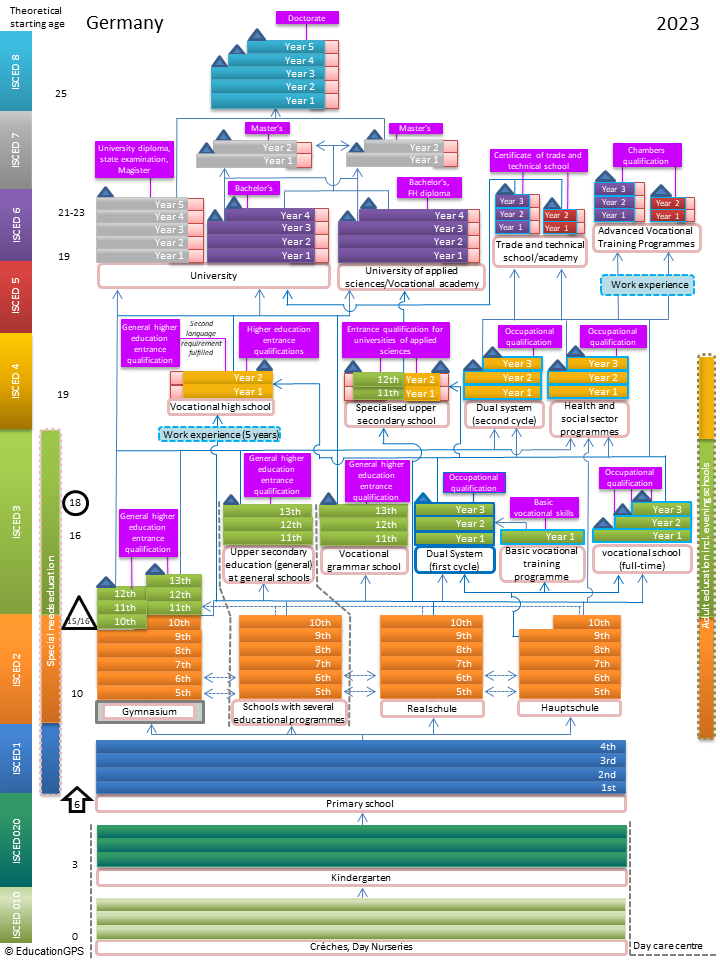
Click on the diagram to get a PDF version
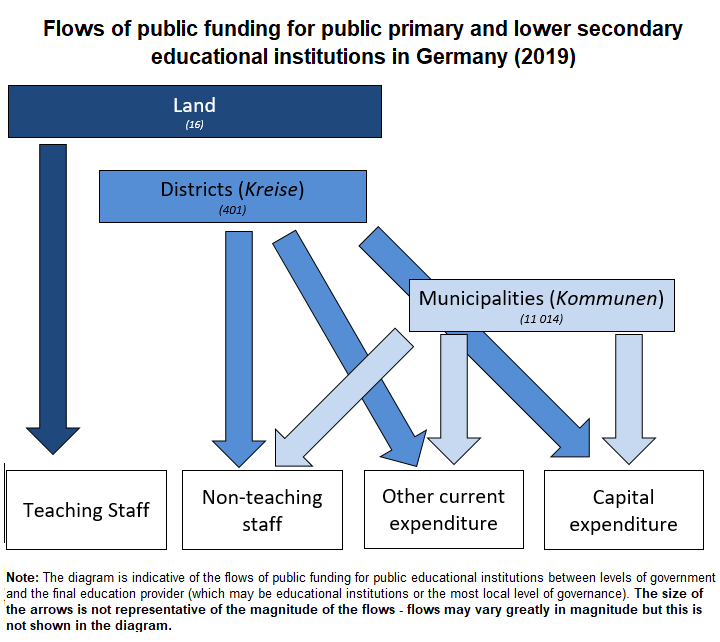
Click on the coverpage to see the full OECD iLibrary version


Note: These values should be interpreted with care since they are influenced by countries' specific contexts and trade-offs. In education, there is often no simple
most- or least-efficient model. For instance, the share of private expenditure in education must be read against other measures designed to mitigate inequities,
such as loans and grants; longer learning time is an opportunity to convey more and better content to students, but may hinder investments in other important
areas. If you want further information on the nature of different variables, please take the time to read the analysis and contextual information, available at the website
for each publication.
All rankings for individual variables are compiled on the basis of OECD and G20 countries for which data are available. The OECD average includes only OECD countries which are listed here: https://www.oecd.org/en/about/members-partners.html
Reference years displayed in the Education GPS correspond to the most common year of reference among countries for which data is available on each variable. Data for the latest available year is preferred and some countries may have provided data refering to a more recent or late year. To know more about possible exceptions on data please click on the "Download Indicator" link on each variable. When a year of reference corresponds to a school year encompassing two years, the reference reads as follows: 2026 for school year 2025/2026.
*TALIS averages are based on all countries participating in the TALIS survey, including partner countries and economies. This explains the difference between the OECD average and the TALIS averages. Data from the TALIS survey and Education at a Glance (EAG) may differ. See Annex E of the TALIS technical report and Annex 3 of EAG 2024 for more details about the data collections.
For additional notes, please refer to annexes in the list of links below the introductory country profile text.
All rankings for individual variables are compiled on the basis of OECD and G20 countries for which data are available. The OECD average includes only OECD countries which are listed here: https://www.oecd.org/en/about/members-partners.html
Reference years displayed in the Education GPS correspond to the most common year of reference among countries for which data is available on each variable. Data for the latest available year is preferred and some countries may have provided data refering to a more recent or late year. To know more about possible exceptions on data please click on the "Download Indicator" link on each variable. When a year of reference corresponds to a school year encompassing two years, the reference reads as follows: 2026 for school year 2025/2026.
*TALIS averages are based on all countries participating in the TALIS survey, including partner countries and economies. This explains the difference between the OECD average and the TALIS averages. Data from the TALIS survey and Education at a Glance (EAG) may differ. See Annex E of the TALIS technical report and Annex 3 of EAG 2024 for more details about the data collections.
For additional notes, please refer to annexes in the list of links below the introductory country profile text.