What's new
The Value of School Principals in TALIS 2024
Policies for Developing Advanced STEM Skills in Higher Education
 Advanced STEM skills are essential for the responsible use of technology. This report defines them as disciplinary, interdisciplinary, transversal and professional competence applied to complex scientific and technological problems and responsible innovation, with ethical, societal and environmental implications. Quantum technologies and artificial intelligence illustrate fields requiring advanced STEM skills, yet determining whether skills for these and other fields are in short supply is difficult. The report identifies five bottlenecks: entry into STEM higher education; persistence and completion; progression to advanced levels; career entry and effective skills use; and skills renewal across working life. Building on this framework, four policy priorities address entry, persistence and completion; progression and skills renewal; programme renewal; and career entry and the effective use and continued development of advanced STEM skills. Policy and practice examples were analysed through the OECD Mutual Learning Group on Advanced STEM Skills in Higher Education, involving researchers, policymakers and higher education practitioners from a wide range of countries. The report’s eight recommendations propose options to address constraints at individual, institutional, employer and system levels, highlighting that implementation requires collaboration across policy portfolios. The report offers a framework for strengthening the development and use of advanced STEM skills and supports implementation of the European Union's STEM Education Strategic Plan: Skills for Competitiveness and Innovation.
Co‑constructing Visions for the Future of Teaching
 What if we create the space to think collectively about the future of teaching? The OECD New Professionalism and the Future of Teaching project did just this in four education systems in 2024‑26. A specific methodology was developed to help professionals with various roles and responsibilities within and outside the education system work together to co‑create preferred visions for the future of teaching. They used and reflected on international and national evidence, including on how the nature of professionalism itself is changing, with greater focus on connective relationships, flexibility in career pathways and development opportunities. What will this mean for teaching? How can we create a future that respects current teachers, attracts new teachers and addresses emerging issues in education? How can we diversify roles within teaching? This report shows the knowledge base for this work and identifies common features across the visions developed by participants. It includes a set of visions contributed by leading minds in education. In sum, it highlights how taking time to think about the future we would like can be a positive and motivating experience that leads to identifying concrete steps on how to collectively get there.
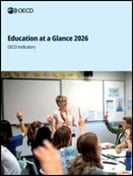
Education at a Glance 2026: OECD Indicators
PISA 2025 Results (Volume I): Future-Ready Students
 The OECD Programme for International Student Assessment (PISA) 2025 evaluates what students know and can do in science, reading, mathematics and computational problem-solving, assessing how effectively they can apply their knowledge to real-world challenges. The assessment also explores a range of broader competencies, attitudes and behaviours, including curiosity, perseverance and the use of artificial intelligence. PISA results provide valuable insights into the quality and equity of learning outcomes around the world, enabling educators and policymakers to learn from each other’s policies and practices. This volume is one of three that present the results of the ninth cycle of PISA. PISA 2025 Results (Volume I): Future-Ready Students focuses on students’ performance in the core learning domains, and explores students’ drive to learn, sense of agency and adaptability and attitudes towards school. It examines differences in learning outcomes by gender, socio-economic status and immigrant background. More than 760 000 students across 91 countries and economies participated in PISA 2025, making it the largest international comparative assessment of 15-year-olds worldwide.
A Conceptual Foundation for the Development of a Lifelong Learning Measurement Framework
 This report proposes a conceptual framework for measuring lifelong learning (LLL) understood as learning across the life course and diverse contexts, aimed at improving policy design and evaluation. It identifies key limitations in current data systems, including narrow age coverage, lack of longitudinal tracking, overemphasis on labour-market outcomes, and insufficient measurement of informal learning.
To address these gaps, the framework is structured around three interconnected pillars: demand, supply, and coordination. Demand captures learning needs at individual, organisational, and societal levels; supply maps opportunities across formal education, workplaces, welfare systems, and communities; and coordination focuses on mechanisms that align needs with provision. The framework also redefines learning by introducing a two-dimensional model based on formalisation and digitalisation, better capturing hybrid and emerging forms.
Finally, it outlines practical steps for implementation, including improved surveys, longitudinal data linkages, administrative data integration, skills passports, and advanced analytics to support more comprehensive and effective lifelong learning systems.
Improving Learning Outcomes in Catalonia, Spain
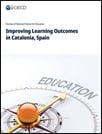 Catalonia has built strong foundations for high-quality education, with high participation rates in education, expanding educational attainment, strong digital infrastructure, and sustained commitments to inclusion. Yet, the system also faces growing pressures. Declining student performance, persistent socio-economic disparities, and increasing pressures on the education workforce and system implementation pose important challenges for the future. In a context of economic, demographic, and technological transformation, this report analyses key opportunities and challenges shaping education policy in Catalonia today. Drawing on OECD expertise, international comparisons, quantitative and qualitative evidence, school visits, and extensive stakeholder engagement, it provides an in-depth diagnostic of the education system and identifies practical pathways for improvement. The report explores four interconnected areas of the Catalan education system: equity and inclusion, teachers and school leadership, evaluation and assessment, and governance and funding. It analyses how policy design and implementation can better support student learning, strengthen professional capacity, improve decision making, and respond more effectively to diverse territorial and social needs.
Navigating Life with Low Literacy and Numeracy: New Results from the 2023 Survey of Adult Skills
 One in three adults across OECD economies lack the foundational skills to participate effectively in the labour market and society. This share has grown over the past decade, making low foundational skills one of the most persistent structural challenges facing advanced economies. Drawing on the 2023 Survey of Adult Skills (PIAAC), this report examines the scale, nature and consequences of low foundational skills in OECD countries and beyond. It analyses how the depth of skill deficits varies across countries and domains; it pinpoints the strongest predictors of low skills and uncovers distinct profiles among low-skilled populations; it highlights how these findings can inform effective policy responses. The report underscores that adults with low foundational skills are not a homogeneous group: deficits differ in severity, are distributed differently across literacy and numeracy, and reflect varying roles of migration and language background. Adults with low foundational skills face substantial and compounding disadvantages in employment, earnings, health and civic participation. Yet those who would benefit most from adult learning are consistently the least likely to engage in upskilling activities. Closing this gap requires active outreach through trusted intermediaries, provision that is contextualised and sufficiently intensive, and a sustained commitment to reaching adults whom adult learning systems have repeatedly failed to serve.
Strengthening Evaluation Practice: Supporting Evaluation across the Thematic Areas of Bulgaria’s Programme Education
 Bulgaria's Programme "Education", funded through the European Social Fund Plus and the national budget, supports reforms designed to improve access, inclusiveness, quality and labour market relevance across the education sector. This report aims to help strengthen implementation and long-term impact by proposing ways to enhance evaluation practice across the Programme, generating constructive learning about what works in different contexts. Building on existing monitoring and operational systems, it provides a toolbox of measures for fund managers and beneficiaries. Drawing on document review, interviews and international examples, the report finds that while Programme "Education" has clear objectives and a well-established monitoring system, the expected causal links between activities, mechanisms and outcomes are not always explicit. Moreover, there is scope to strengthen learning during implementation by encouraging greater reflection among beneficiaries on what contributes to change, for whom, and under what conditions. Finally, although Bulgaria has rich administrative data, limitations in access and linkage can constrain more robust analysis of outcomes. The report proposes practical recommendations, including greater use of simple theories of change; indicators that better capture outputs, mechanisms and outcomes; improved access to administrative data; more learning-oriented implementation practices; and better conditions for rigorous evaluation where appropriate.
Building Quality Education and Care for Children under Three: Further Results from TALIS Starting Strong 2024
 The first three years of children’s lives represent a sensitive period of rapid growth. The Early Childhood Education and Care (ECEC) sector for children under age 3 has expanded, driven by the need to support parents’ employment and growing recognition of the importance of ECEC for children's development. This expansion has relied on different types of provision, including private and home-based ones. As a result, ECEC systems for children under age 3 are often fragmented, creating a risk of uneven quality across the sector.
This thematic report draws on data from TALIS Starting Strong 2024 to examine how to achieve more consistent and stronger ECEC quality for children under age 3 in the context of expanding enrolment to a broader, more diverse group of children. The policy context, governance and key features of ECEC provision for children under age 3 are considered. The report explores how differences across types of provision and providers shape children's daily experiences, the resources available and staff working conditions. TALIS Starting Strong 2024 data inform strategies to reduce quality gaps and support continuous improvement in ECEC for children under age 3.
Towards a Harmonised Micro‑Credential Ecosystem in Czechia
 An increasing number of OECD countries are seeking to exploit the potential of micro-credentials as a way to increase uptake of upskilling and reskilling in the face of rapid technological change and demographic aging. Micro-credentials record the learning outcomes that learners acquire on completion of learning activities that are smaller, more targeted, and more flexible than traditional formal education and training programmes and can theoretically be issued by a wide range of education and training providers. This report sets out a proposed strategy for the further implementation of micro-credentials across education and training sectors in Czechia. Developed as part of a project financed by the European Union’s Technical Support Instrument (TSI), the recommendations presented draw on an assessment of the Czech context, in-depth analysis of international policies and practice in other OECD countries and a wide-ranging consultation with stakeholders across Czech regions.
Every Day Counts: Understanding, Preventing and Responding to School Attendance Problems
 Every morning, millions of children are expected to attend school. Yet many face barriers that prevent regular attendance. School attendance problems are no longer a marginal issue; they have become a challenge affecting classrooms in nearly every country. Every Day Counts: Understanding, Preventing and Responding to School Attendance Problems synthesises evidence from the OECD Policy Survey on School Attendance Problems, literature and international large-scale assessments to give an account of key concepts, terminology and international trends, drivers, and consequences of school absences. It also takes stock of policies and practices for supporting school attendance and distils key messages and policy pointers emerging from the evidence presented in the report. The report will be of interest to policy-makers, practitioners and researchers seeking to promote regular school attendance and strengthen support for students experiencing school attendance problems within their education systems.
Building Strong Foundations for Life: Results from the 2025 Early Learning and Child Well-being Study
 The first five years of a child’s life represent a critical window of opportunity, but also of vulnerability. Strong early skills prepare children to succeed in education and to develop into healthy, well-adjusted adults. But a poor start can hinder these positive trajectories. For countries, few investments yield greater long-term benefits than ensuring that all children acquire solid foundational skills.
The International Early Learning and Child Well Being Study (IELS) provides countries with comparative data on children’s early learning and development. It helps governments understand how early outcomes relate to experiences and environments influenced by early years policies. The study combines direct and indirect assessments of the foundational learning, executive function and social and emotional skills of five-year-olds in schools and early childhood education and care (ECEC) settings. It also collected information on children’s characteristics, home environments and participation in ECEC from parents and staff. This report presents the main findings from IELS 2025 and sets the stage for deeper analysis of progress and gaps across children’s learning trajectories.
International Students in Higher Education: A comparative analysis of trends, challenges and policy responses in Australia, Canada, France, Germany, the Netherlands and the United Kingdom
 Australia, Canada, France, Germany, the Netherlands and the United Kingdom have been among the OECD countries with the strongest growth in international student enrolment over the last decade. International students have significantly contributed to enrolment growth, shaped campus life and, in some countries, institutional finances. This report examines the journey and challenges of international students, from choosing where and what to study and obtaining a study visa/permit, to adapting academically, finding housing, integrating into local communities, progressing in their studies and navigating post-graduation pathways. After strong growth through the 2010s and a rebound after the COVID-19 pandemic, international student mobility is entering a more uncertain phase, with some countries tightening policies while others continue to expand international enrolment. By comparing six major OECD study destinations, the report highlights both shared challenges and emerging policy responses. It provides timely evidence on trends, challenges and policy responses related to international student enrolment at a time of growing public and policy attention.
Findings from TALIS 2024 in Albania, Kosovo, Montenegro, North Macedonia and Serbia: Improving Teacher Policies and Practice
Results from the Teacher Knowledge Survey: What Teachers Know About General Pedagogy
The Modernisation of Vocational Education and Training project in Bulgaria: Lessons from early implementation
 In recent years, Bulgaria has introduced several initiatives to improve the quality, relevance and attractiveness of vocational education and training (VET). The “Modernisation of VET” project (2024-2029), funded by the European Social Fund Plus and the national budget, is a comprehensive reform initiative to strengthen labour market relevance by updating curricula, improving teaching practices and reinforcing links between VET providers and employers. This interim evaluation examines progress in the first years of project implementation, focusing on efforts to enhance collaboration between VET and the labour market at system and school level. It finds that the project addresses a long-standing need in Bulgaria by introducing or enhancing collaborative mechanisms, such as Sectoral Skills Councils, practitioner teachers, and 240-hour student placements. These and other reforms under the project align closely with national and EU priorities and there are early signs of effectiveness where reform and implementation design have promoted coherence and multi-stakeholder partnership. However, tight timelines for system-level reforms and limited operational guidance for schools have created challenges, particularly in ensuring consistent, high-quality practice. Nevertheless, the project represents an unprecedented effort to reform VET at scale, laying a strong foundation for vocational programmes to be more relevant to labour market needs.
| >> Further Links |
 |
 |
Featured chart: Results from Education at a Glance 2026
More:  Education policies: Key messages and policy options
 Source: EAG 2026



 The OECD Teaching and Learning International Survey (TALIS) is the world’s largest survey of teachers and principals. In 2024, 280 000 teachers across 55 education systems shared their views on the leadership of 17 000 principals, while principals themselves described their practices, working conditions, professional development and school organisation. This report explores why valued leadership matters, who valued principals are, where they work, what they do and how they can be supported. By bringing together the perspectives of teachers and principals, TALIS provides governments with evidence to strengthen teaching, leadership and learning conditions in schools.







 Education at a Glance (EAG)
Programme for International Student Assessment (PISA)
Survey of Adult Skills (PIAAC)
Teaching and Learning International Survey (TALIS)
Centre for Educational Research and Innovation (CERI)
 Education Indicators in Focus
PISA in Focus
Adult Skills in Focus
Teaching in Focus
OECD Education Policy Perspectives
OECD Education Reports
OECD Education Working Papers
OECD Education Country Notes

