Country reports for Italy
–Teaching and Learning International Survey (TALIS) 2024 Results: Italy - Country Note
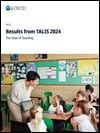
The OECD Teaching and Learning International Survey (TALIS) is the world’s largest survey of teachers and principals. In 2024, educators from 55 education systems provided information about what they do and how they are doing. They explain if and how they use artificial intelligence, why they became teachers and if they wish to continue teaching. Governments use data from TALIS to make policies that improve teaching and learning conditions in their schools.
| Publication date: |
07 October 2025 |
+Education at a Glance 2025: Italy - Country Note
Education at a Glance is the authoritative source of information on the state of education worldwide. It offers comprehensive data on the structure, financing, and performance of education systems across OECD countries and partner economies. This publication features more than 100 charts and tables that present key insights into the output of educational institutions, the impact of learning across countries, access and participation in education, financial investment in education, and the roles of teachers and school organisation. The 2025 edition places a special focus on tertiary education, examining attainment rates, variations in labour market outcomes by field of study, completion rates, and the skills of adults with tertiary qualifications.
| Publication date: |
09 September 2025 |
+Survey of Adult Skills (PIAAC) Results: Italy - Country Note

The Survey of Adult Skills offers unique insights on adults’ proficiency in literacy, numeracy, and problem solving. These skills are crucial for both personal and societal success, and form the foundation for continuous learning and innovation. In 2022-23, the survey assessed adults aged 16-65 in 31 countries and economies. By comparing results over time and with those of other participating countries and economies, participants can track the skill levels of its adult population, pinpoint barriers to skill development and use, and craft effective policies to address these challenges.
| Publication date: |
10 December 2024 |
+Country Digital Education Ecosystems and Governance: A Companion to Digital Education Outlook 2023 (Italy)
This report, linked with the Digital Education Outlook 2023, provides an overview of 29 countries' (or jurisdictions') digital education ecosystem and governance. Each chapter covers the devolution of responsibilities within countries; how it affects digital education; what digital tools for management and teaching and learning are made publicly available to schools, teachers and students; how they are provided or procured; how countries ensure the security, privacy, equity and effectiveness of this digital ecosystem while keeping incentives for private education technology (EdTech) companies. The information and analysis are based on a survey on digital education infrastructure and governance, interviews with national and regional government officials as well as desk-based research. Providing for the first time a holistic view of 29 countries' and jurisdictions' digital education ecosystem and governance, this report will be of interest to policy makers, academics and education stakeholders interested in the digital transformation of education at home and internationally.
| Publication date: |
13 December 2023 |
+Programme for International Student Assessment (PISA) 2022 Results: Italy - Country Note
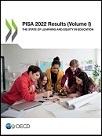
The OECD Programme for International Student Assessment (PISA) examines what students know in reading, mathematics and science, and what they can do with what they know. It provides the most comprehensive and rigorous international assessment of student learning outcomes to date. Results from PISA indicate the quality and equity of learning outcomes attained around the world, and allow educators and policy makers to learn from the policies and practices applied in other countries. This country note provides a country-specific overview of Italy.
| Publication date: |
05 December 2023 |
+Teaching and Learning International Survey (TALIS) 2018 Results (Volume II): Italy - Country Note

The OECD Teaching and Learning International Survey (TALIS) is the first international large-scale survey that provides a voice to teachers and school principals, who complete questionnaires about issues such as the professional development they have received; their teaching beliefs and practices; the assessment of their work and the feedback and recognition they receive; and various other school leadership, management and workplace issues. This note presents findings based on the reports of lower secondary teachers and their school leaders in mainstream public and private schools in Italy.
| Publication date: |
23 March 2020 |
+Teaching and Learning International Survey (TALIS) 2018 Results (Volume I): Italy - Country Note

The OECD Teaching and Learning International Survey (TALIS) is the first international large-scale survey that provides a voice to teachers and school principals, who complete questionnaires about issues such as the professional development they have received; their teaching beliefs and practices; the assessment of their work and the feedback and recognition they receive; and various other school leadership, management and workplace issues. This note presents findings based on the reports of lower secondary teachers and their school leaders in mainstream public and private schools in Italy.
| Publication date: |
19 June 2019 |
+OECD Skills Strategy Diagnostic Report: Italy 2017
Italy needs to take prompt action to bolster growth and improve people's skills across the country. As our economies adapt to globalisation, technological and demographic change, the demand for new and higher levels of skills increases. Yet Italy is struggling more than other advanced economies to meet these changing demands. Italy has launched a number of ambitious reforms to boost growth. But the reforms need to fully implement to ensure that schools, universities and workplaces equip all Italians with the skills needed for success in the economy and society. The OECD Skills Strategy Report makes a number of recommendations that will help sustain this positive momentum including, among others, to: 1) implement the Alternanza Scuola Lavoro (ASL) by training school principals and teachers to effectively engage employers in the design of work-based learning activities and increase incentives for firms to hire trainees; 2) expand and improve the quality of professional tertiary education institutions (ITS); 3) increase overall investment in tertiary education; 4) subsidise training programmes that target low-skilled adults who often face difficulties in accessing such opportunities; 5) increase public and private investment in skills and improve how they are allocated through monitoring and evaluation; 6) improve the governance system to ensure that skills polices are aligned and coordinated.
| Publication date: |
02 April 2018 |
+OECD Skills Outlook 2017: Skills and Global Value Chains - Country Note on Italy
The OECD Skills Outlook 2017 shows that skills matter for global value chains. The report presents new analyses based on the Survey of Adult Skills, a product of the OECD Programme for the International Assessment of Adult Competencies (PIAAC), and the Trade in Value Added Database. It develops a Scoreboard on Skills and Global Value Chains with the objective to measure the extent to which countries have been able to make the most of GVCs through the skills of their populations in terms of skills, global value chains, and social and economic outcomes. It also explains what countries would need to do to specialise in technologically advanced industries.
| Publication date: |
01 May 2017 |
+Education Policy Outlook Country Policy Profile: Italy
This policy profile on education in Italy is part of the Education Policy Outlook series, which presents comparative analysis of education policies and reforms across OECD countries. Building on the OECD's substantial comparative and sectorial policy knowledge base, the series offers a comparative outlook on education policy by providing analysis of individual countries' educational context, challenges and policies (education policy profiles), analysis of international trends, and insight into policies and reforms on selected topics.
| Publication date: |
01 February 2017 |
+Starting Strong IV: Monitoring Quality in Early Childhood Education and Care Country Note: Italy
Italy has a split Early Childhood Education and Care (ECEC) system, with different authorities in charge of ECEC: the Ministry of Labour and Social Policies (Ministero del Lavoro e delle Politiche Sociali) and the Department of Family Policies (Dipartimento per le politiche della famiglia) within the Presidency of the Council of Ministers (Presidenza del Consiglio dei Ministri) are responsible for ECEC for children up to the age of three years; the Ministry of Education, University and Research (Ministero dell'istruzione, dell'università e della ricerca) is responsible for children in ECEC between three and six years. Italy is currently considering reforming their system into an integrated ISCED (International Standard Classification of Education) level 0 system. Pre-primary education for 3-6 year-olds is guided by National Guidelines for the 3-14 year-olds Curriculum (Indicazioni Nazionali per il curricolo), ECEC services for the youngest children in nidi (nurseries) and integrative settings are licensed by local municipalities; pre-primary schools are licensed by regional authorities supervised by central authorities.
| Publication date: |
01 January 2017 |
+Measuring Innovation in Education: Country Note on Italy
This short country note recaps some Background on the 2014 OECD Measuring Innovation in Education report, the main Key report findings on innovation in education, the Report approach to measuring educational system innovation, along with Italy's top five organisational education innovations for the 2003-2011 period and Italy's top five pedagogic education innovations for the same interval.
| Publication date: |
01 July 2014 |
+Case study: A System in Transition in Italy
In 1976, several Italian scholars succeeded in calling attention to the need for better assessment instruments as a way to fight school failure and to strengthen pedagogy. They demonstrated the value of new approaches with positive empirical evidence A number of other scholars have contributed to the understanding of individual student assessment, and actively promoting the use of better tools and methods for student assessment in schools. These researchers share a common conception of the school as a promoter of democracy and participation. They encourage the development of evaluation systems that avoid selection and early exclusion of students, particularly students from the lower classes and the development of shared, scientifically based, rational, and to the degree possible - objective - evaluation to as a tool to promote learning, rather than to sort students. This case study analyses two Italian school to assess the advances on that matter.
| Publication date: |
01 January 2005 |
+Country Background Report: Attracting, Developing and Retaining Effective Teachers: Italy
This Report aims at describing and supplying evidence of the present reality of the status of Italian teachers with respect to the changes that Italian school has been going through in recent years as well as identifying the main trend and development lines of this condition with respect to the political union and professional association initiatives. The first chapter describes the social, cultural and political conditions in which the Italian school system and the teaching profession are called to operate. The second chapter describes the school system and its articulations in administrative organisation, including participation and research bodies. The third chapter analyses the principal modalities of teachers' initial and in-service (updating) professional training. The fourth chapter is dedicated to teachers' recruitment and describes the characteristics of labour
demand and appointment modalities. The last chapter describes the most important characteristics of the status of teachers as regards both the professional and the contract aspects.
| Publication date: |
01 July 2003 |
| ✓ Background Report: |
Italy |
+Reviews of National Policies for Education: Italy 1998
OECD's 1998 review of Italy's education system. It finds that a major reform of the entire Italian education and training system is in progress, aiming at the improvement and integration of learning in schools, universities and regional training institutions in order to respond to changing social and economic demands for knowledge, skills and qualifications. Fundamental changes will include the decentralisation of administrative responsibilities and increased school autonomy, enabling the grassroot actors in education and training to respond more flexibly to the diversity of individual, local and enterprise needs and to utilise more effectively available funds and technologies. Central elements in the reform will also provide evaluation and increased accountability across the system. The OECD examiners support these objectives and suggest a number of strategies to strengthen the implementation of the reform goals. They underline the need for broad societal agreement on these goals and the mobilisation of all the parties involved in order to achieve the wide-ranging changes which are envisaged.
| Publication date: |
30 September 1998 |