


 Austria
Austria
Austria
 Interactive data profiles:
 |
|
|
|
|
|
|
|
|
|
|
|
|
|
|
|
|
|
|
|
|
|
|
|
|
|
|
|
|
|
|
|
|
|
|
|
|
|
|
|
|
|
|
|
|
|
|
|
|
|
|
|
|
|
|
|
|
|
|
|
|
|
|
|
|
|
|
|
|
|
|
|
|
|
|
|
|
|
|
|
|
|
|
|
|
|
|
|
|
|
|
|
|
|
|
|
|
|
|
|
|
|
|
|
|
|
|
|
|
|
|
|
|
|
|
|
|
|
|
|
|
|
|
|
|
|
|
|
|
|
|
|
|
|
|
|
|
|
|
|
|
|
|
|
|
|
|
|
|
|
|
|
|
|
|
|
|
|
|
|
|
|
|
|
|
|
|
|
|
|
|
|
|
|
|
|
|
|
|
|
|
|
|
|
|
|
|
|
|
|
|
|
|
|
|
|
|
|
|
|
|
|
|
|
|
|
|
|
|
|
|
|
|
|
|
|
|
|
|
|
|
|
|
|
|
|
|
|
|
|
|
|
|
|
|
|
|
|
|
|
|
|
|
|
|
|
|
|
|
|
|
|
|
|
|
|
|
|
|
|
|
|
|
|
|
|
|
|
|
|
|
|
|
|
|
|
|
|
|
|
|
|
|
|
|
|
|
|
|
|
|
|
|
|
|
|
|
|
|
|
|
|
|
|
|
|
|
|
|
|
|
|
|
|
|
|
|
|
|
|
|
|
|
|
|
|
|
|
|
|
|
|
|
|
|
|
|
|
|
|
|
|
|
|
|
|
|
|
|
|
|
|
|
|
|
|
|
|
|
|
|
|
|
|
|
|
|
|
|
|
|
|
|
|
|
|
|
|
|
|
|
|
|
|
|
|
|
|
|
|
|
|
|
|
|
|
|
|
|
|
|
|
|
|
|
|
|
|
|
|
|
|
|
|
|
|
|
|
|
|
|
|
|
|
|
|
|
|
|
|
|
|
|
|
|
|
|
|
|
|
|
|
|
|
|
|
|
|
|
|
|
|
|
|
|
|
|
|
|
|
|
|
|
|
|
|
|
|
|
|
|
|
|
|
|
 Country reports and publications
Austria
Teachers and teaching conditions (TALIS 2024)
* Estimates for Alberta (Canada), the Netherlands, New Zealand and Norway should be interpreted with caution due to higher risk of non-response bias.
| Country Note | TALIS 2024 : The State of Teaching | TALIS 2024 Conceptual Framework | TALIS 2024 Conceptual and Assessment Framework | Austria in TALIS | Education policies: Teachers |

Select first some countries to compare, choose the charts you wish to display and customise them.
The following list displays indicators for which your selected country shows the highest and lowest values among countries.
The list can be sorted by level of education or by age group. All rankings are calculated including available data from OECD
and partner countries.
Find out more about the methodology here.
Show indicators for which your country ranks among the top or bottom:
Sort by:
Initial and induction training of teachers
The proportion of recent lower secondary teacher graduates in Austria who “agree” or “strongly agree” that the quality of their initial education was high overall was among the lowest across countries with available data. (63.4 %, rank 51/55 , 2024) Download Indicator
In Austria, the percentage of recent lower secondary teacher graduates who felt well prepared by their initial education to use digital resources and tools for teaching was among the lowest across countries with available data. (42.6 %, rank 51/55 , 2024) Download Indicator
The share of recent lower secondary teacher graduates in Austria reporting that their initial education prepared them well to support students’ social and emotional development was among the smallest across countries with available data. (18.7 %, rank 52/55 , 2024) Download Indicator
Professional development of teachers
Among novice lower secondary teachers in Austria, the percentage reporting that professional learning activities during the 12 months preceding the survey had a positive impact on their teaching was among the lowest across countries with available data. (39.3 %, rank 52/55 , 2024) Download Indicator
Teacher appraisal and feedback
Compared to other countries participating in TALIS, in Austria, there is a low proportion of eachers who report receiving feedback from external individuals or bodies. (26.1 %, rank 52/55 , 2024) Download Indicator
Teachers' practices
In Austria, the share of lower secondary teachers who reported fulfilling their lesson aims “quite a bit” or “a lot” across all seven TALIS areas was among the lowest across countries with available data. (27.6 %, rank 51/55 , 2024) Download Indicator
The proportion of novice lower secondary teachers in Austria who reported fulfilling their lesson aims “quite a bit” or “a lot” across all seven TALIS areas was among the lowest across countries with available data. (21.7 %, rank 53/55 , 2024) Download Indicator
ICT for teaching
The percentage of lower secondary teachers in Austria working in schools where at least one lesson was taught hybrid or online in the last month was among the lowest across countries with available data. (4.4 %, rank 50/54 , 2024) Download Indicator
Teaching in multicultural settings
In Austria, more teachers have at least 10% of students whose first language is different from the language of instruction in their class. (62.6 %, rank 5/55 , 2024) Download Indicator
Teacher leadership and autonomy
The percentage of lower secondary teachers in Austria who “agree” or “strongly agree” that their school encourages staff to lead new initiatives was among the lowest across countries with available data. (75.1 %, rank 52/55 , 2024) Download Indicator
Teachers' autonomy, collegiality and collaboration
Compared to most other TALIS countries, Austria has a lower proportion of teachers who participate in collaborative professional learning in their school at least once a month. (6 %, rank 52/55 , 2024) Download Indicator
A high share of teachers report engaging in team-teaching at least once a month. (61 %, rank 4/55 , 2024) Download Indicator
Teachers' satisfaction with their jobs
Compared to most other TALIS countries, Austria has a high proportion of teachers who are satisfied with the salary they receive for their work. (71.9 %, rank 4/55 , 2024) Download Indicator
Compared to most other TALIS countries, Austria has a high proportion of teachers who, apart from their salary, are satisfied with the terms of their teaching contract/employment. (81.6 %, rank 5/55 , 2024) Download Indicator
Teacher stress factors
In Austria, the share of lower secondary teachers stressed by extra duties due to absent colleagues was among the highest across countries with available data. (47 %, rank 3/55 , 2024) Download Indicator
In Austria, the percentage of lower secondary teachers who reported stress from having too much work on diversity and equity issues was among the lowest across countries with available data. (14.3 %, rank 53/55 , 2024) Download Indicator
The data table will display up to six selected countries.
General findings
- Teachers are aging in many education systems. While the average age of teachers is around 45 years old, more than one out of two teachers are 50 or older.
- Prior non-teaching work experience is more and more common for teachers. In around half of the education systems, at least one out of two teachers have prior non-teaching work experience.
Visualisations
Click the arrow sign next to the title:
 to display other variables
to display other variables
Click the arrow sign next to the title:
to display other variables
to display other variables
Click the arrow sign next to the title:
to display other variables
to display other variables
- Around one in three teachers report having used artificial intelligence (AI) in their work, on average across OECD education systems.
- Many teachers – especially female and experienced teachers – report meeting key lesson aims, though supporting students' social and emotional learning remains challenging.
| Education policies: Teacher practices | Education policies: Learning time and Disciplinary climate | Education policies: Special needs | Education policies: Migrant background | Education policies: Digital divide |
Visualisations
Click the arrow sign next to the title:
to display other variables
to display other variables
Click the arrow sign next to the title:
to display other variables
to display other variables
Click the arrow sign next to the title:
to display other variables
to display other variables
- The large majority of teachers are satisfied with their profession, which indicates that most teachers find meaning and personal fulfilment in their work. Almost nine in ten teachers report that they are satisfied with their jobs overall.
- Administrative workload remains a considerable demand for teachers. About half of teachers report excessive administrative work as a source of work-related stress, particularly those with more than ten years of experience.
- Discipline and behaviour issues as sources of stress are important predictors of teachers’ fulfilment of their lesson aims, their well-being, job satisfaction and their intention to leave teaching. About one in five teachers report experiencing significant disruptive noise and disorder in their classrooms, and the share of time spent on maintaining discipline has increased since 2018.
- Teachers are spending more time working together compared to 2018. Full-time teachers report spending around 3 hours per week participating in teamwork and dialogue with colleagues. Teachers who report good professional relationships with principals, other teachers, parents and guardians, and students tend to report higher well-being and job satisfaction.
Visualisations
Click the arrow sign next to the title:
to display other variables
to display other variables
Click the arrow sign next to the title:
to display other variables
to display other variables
Click the arrow sign next to the title:
to display other variables
to display other variables
- Administrative workload remains a considerable demand for teachers. About half of teachers report excessive administrative work as a source of work-related stress, particularly those with more than ten years of experience.
- Discipline and behaviour issues as sources of stress are important predictors of teachers’ fulfilment of their lesson aims, their well-being, job satisfaction and their intention to leave teaching. About one in five teachers report experiencing significant disruptive noise and disorder in their classrooms, and the share of time spent on maintaining discipline has increased since 2018.
- Teachers’ satisfaction with their terms of employment (including salary) has increased in many education systems since 2018.
| Education policies: Teacher working conditions | Education policies: Class size & Student-teacher ratio |
Visualisations
Click the arrow sign next to the title:
to display other variables
to display other variables
Click the arrow sign next to the title:
to display other variables
to display other variables
Click the arrow sign next to the title:
to display other variables
to display other variables
- Mentoring is gaining popularity. About one in four novice teachers (teachers with up to five years of teaching experience) has an assigned mentor.
- While nearly all teachers participate in continuous professional learning, not all of them find that doing so has a positive impact on their teaching. Just 55% of teachers report that the professional learning activities they participated in during the 12 months preceding the survey had a positive impact on their teaching.
| Education policies: Teacher initial education | Education policies: Teacher professional development |
Visualisations
Click the arrow sign next to the title:
to display other variables
to display other variables
Click the arrow sign next to the title:
to display other variables
to display other variables
Click the arrow sign next to the title:
to display other variables
to display other variables
- Teachers are spending more time working together compared to 2018. Full-time teachers report spending around 3 hours per week participating in teamwork and dialogue with colleagues. Teachers who report good professional relationships with principals, other teachers, parents and guardians, and students tend to report higher well-being and job satisfaction.
Visualisations
Click the arrow sign next to the title:
to display other variables
to display other variables
Click the arrow sign next to the title:
to display other variables
to display other variables
Click the arrow sign next to the title:
to display other variables
to display other variables
- Feedback and appraisal are common features of teachers’ professional lives. On average across OECD education systems, 88% of teachers report receiving feedback from their school principal, 61% from assigned mentors and 55% from external individuals or bodies. At the same time, principals report that only less than 6% of teachers are never formally appraised.
Visualisations
Click the arrow sign next to the title:
to display other variables
to display other variables
Click the arrow sign next to the title:
to display other variables
to display other variables
Click the arrow sign next to the title:
to display other variables
to display other variables
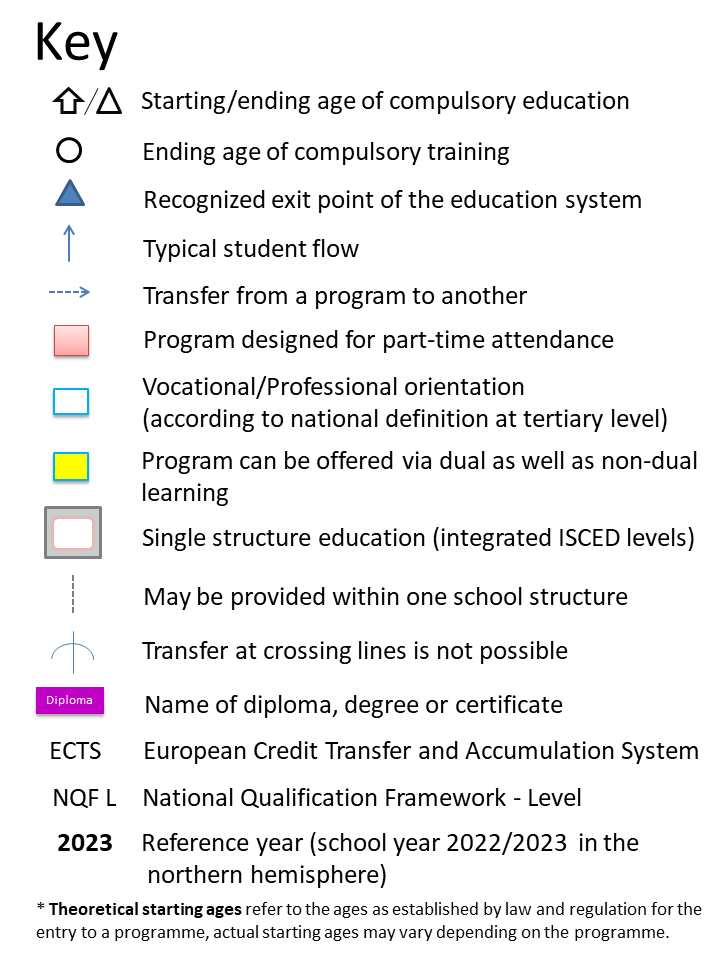
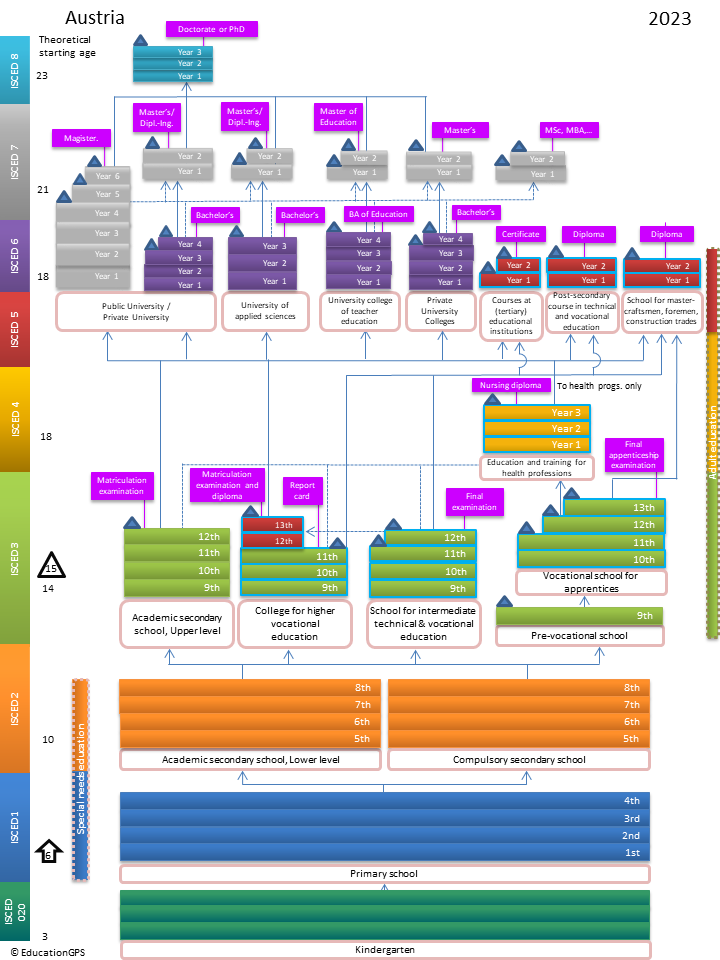
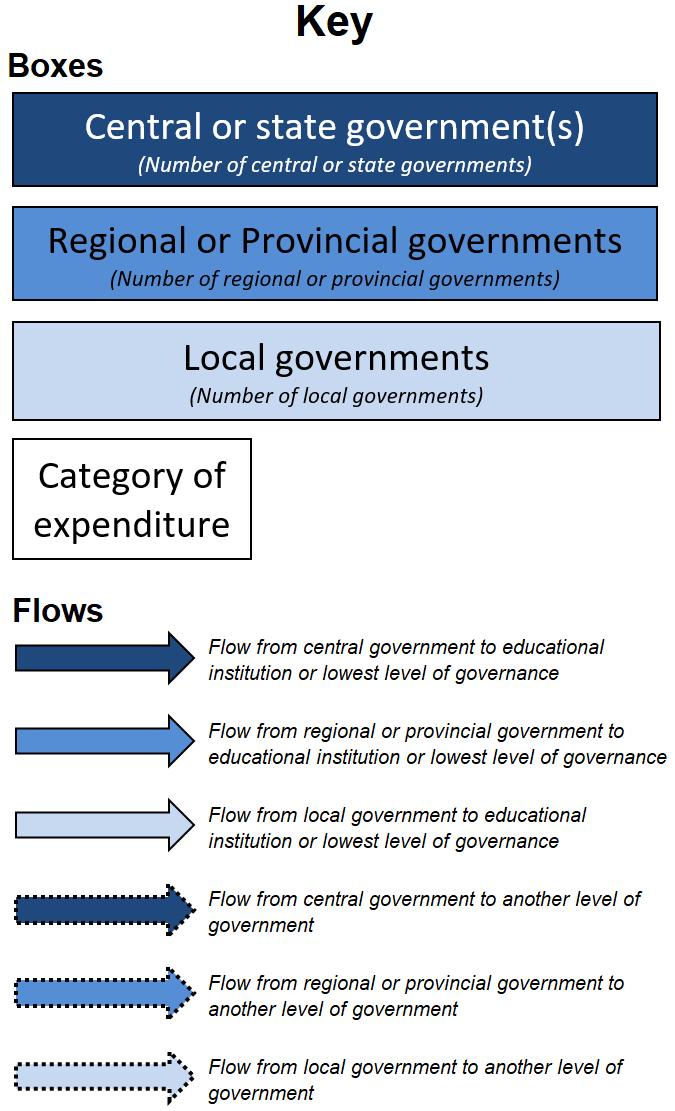
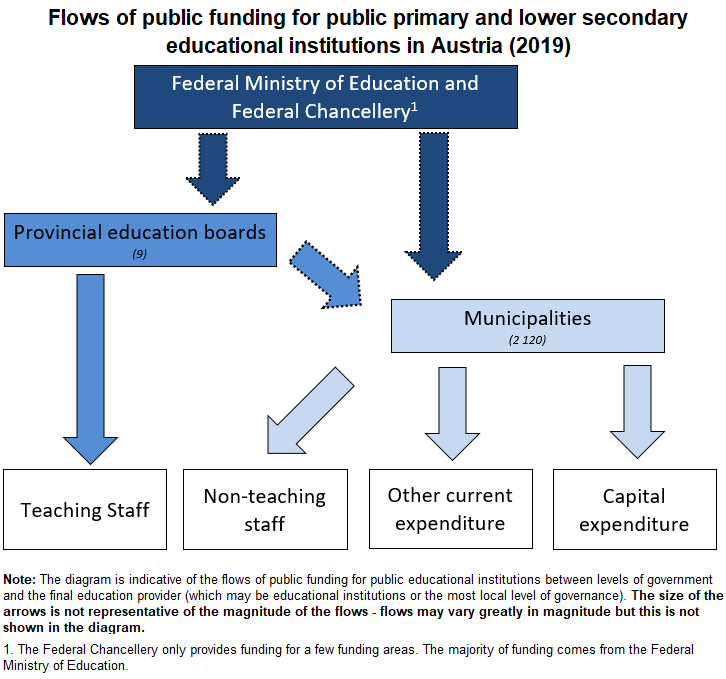
Click on the diagram to get a PDF version
Click on the coverpage to see the full OECD iLibrary version


Note: These values should be interpreted with care since they are influenced by countries' specific contexts and trade-offs. In education, there is often no simple
most- or least-efficient model. For instance, the share of private expenditure in education must be read against other measures designed to mitigate inequities,
such as loans and grants; longer learning time is an opportunity to convey more and better content to students, but may hinder investments in other important
areas. If you want further information on the nature of different variables, please take the time to read the analysis and contextual information, available at the website
for each publication.
All rankings for individual variables are compiled on the basis of OECD and G20 countries for which data are available. The OECD average includes only OECD countries which are listed here: https://www.oecd.org/en/about/members-partners.html
Reference years displayed in the Education GPS correspond to the most common year of reference among countries for which data is available on each variable. Data for the latest available year is preferred and some countries may have provided data refering to a more recent or late year. To know more about possible exceptions on data please click on the "Download Indicator" link on each variable. When a year of reference corresponds to a school year encompassing two years, the reference reads as follows: 2026 for school year 2025/2026.
*TALIS averages are based on all countries participating in the TALIS survey, including partner countries and economies. This explains the difference between the OECD average and the TALIS averages. Data from the TALIS survey and Education at a Glance (EAG) may differ. See Annex E of the TALIS technical report and Annex 3 of EAG 2024 for more details about the data collections.
For additional notes, please refer to annexes in the list of links below the introductory country profile text.
All rankings for individual variables are compiled on the basis of OECD and G20 countries for which data are available. The OECD average includes only OECD countries which are listed here: https://www.oecd.org/en/about/members-partners.html
Reference years displayed in the Education GPS correspond to the most common year of reference among countries for which data is available on each variable. Data for the latest available year is preferred and some countries may have provided data refering to a more recent or late year. To know more about possible exceptions on data please click on the "Download Indicator" link on each variable. When a year of reference corresponds to a school year encompassing two years, the reference reads as follows: 2026 for school year 2025/2026.
*TALIS averages are based on all countries participating in the TALIS survey, including partner countries and economies. This explains the difference between the OECD average and the TALIS averages. Data from the TALIS survey and Education at a Glance (EAG) may differ. See Annex E of the TALIS technical report and Annex 3 of EAG 2024 for more details about the data collections.
For additional notes, please refer to annexes in the list of links below the introductory country profile text.