


 Austria
Austria
Austria
 Interactive data profiles:
 |
|
|
|
|
|
|
|
|
|
|
|
|
|
|
|
|
|
|
|
|
|
|
|
|
|
|
|
|
|
|
|
|
|
|
|
|
|
|
|
|
|
|
|
|
|
|
|
|
|
|
|
|
|
|
|
|
|
|
|
|
|
|
|
|
|
|
|
|
|
|
|
|
|
|
|
|
|
|
|
|
|
|
|
|
|
|
|
|
|
|
|
|
|
|
|
|
|
|
|
|
|
|
|
|
|
|
|
|
|
|
|
|
|
|
|
|
|
|
|
|
|
|
|
|
|
|
|
|
|
|
|
|
|
|
|
|
|
|
|
|
|
|
|
|
|
|
|
|
|
|
|
|
|
|
|
|
|
|
|
|
|
|
|
|
|
|
|
|
|
|
|
|
|
|
|
|
|
|
|
|
|
|
|
|
|
|
|
|
|
|
|
|
|
|
|
|
|
|
|
|
|
|
|
|
|
|
|
|
|
|
|
|
|
|
|
|
|
|
|
|
|
|
|
|
|
|
|
|
|
|
|
|
|
|
|
|
|
|
|
|
|
|
|
|
|
|
|
|
|
|
|
|
|
|
|
|
|
|
|
|
|
|
|
|
|
|
|
|
|
|
|
|
|
|
|
|
|
|
|
|
|
|
|
|
|
|
|
|
|
|
|
|
|
|
|
|
|
|
|
|
|
|
|
|
|
|
|
|
|
|
|
|
|
|
|
|
|
|
|
|
|
|
|
|
|
|
|
|
|
|
|
|
|
|
|
|
|
|
|
|
|
|
|
|
|
|
|
|
|
|
|
|
|
|
|
|
|
|
|
|
|
|
|
|
|
|
|
|
|
|
|
|
|
|
|
|
|
|
|
|
|
|
|
|
|
|
|
|
|
|
|
|
|
|
|
|
|
|
|
|
|
|
|
|
|
|
|
|
|
|
|
|
|
|
|
|
|
|
|
|
|
|
|
|
|
|
|
|
|
|
|
|
|
|
|
|
|
|
|
|
|
|
|
|
|
|
|
|
|
|
|
|
|
|
|
|
|
|
|
|
|
|
|
|
|
|
|
|
|
|
|
|
|
|
|
|
|
|
|
|
|
|
|
|
|
|
|
|
|
|
|
|
|
|
 Country reports and publications
Austria
Adult skills (Survey of Adult Skills, PIAAC, 2023)
| Country note | Survey of Adult Skills (PIAAC) | Survey of Adult Skills 2023: Do Adults Have the Skills They Need to Thrive in a Changing World? | The Survey of Adult Skills - Reader's Companion | Understanding Skill Gaps in Firms: Results of the PIAAC Employer Module | Survey of Adult Skills 2023 Data Analysis Manual |

Select first some countries to compare, choose the charts you wish to display and customise them.
The following list displays indicators for which your selected country shows the highest and lowest values among countries.
The list can be sorted by level of education or by age group. All rankings are calculated including available data from OECD
and partner countries.
Find out more about the methodology here.
Show indicators for which your country ranks among the top or bottom:
Sort by:
Graduation
The average age of short-cycle tertiary graduates in Austria is among the youngest. (20.1 Years, rank 25/25 , 2023) Download Indicator
The average age of master's or equivalent graduates in Austria is among the oldest. (30.6 Years, rank 2/22 , 2023) Download Indicator
Graduation by gender
In Austria, the share of female first-time bachelor's graduates is one of the largest among OECD countries and partner economies with available data. (61.5 %, rank 9/33 , 2023) Download Indicator
In Austria, the share of female first-time master's graduates is relatively smallest, compared to OECD and partner countries with available data. (57.4 %, rank 17/23 , 2023) Download Indicator
Graduation by field of education
In Austria, the proportion of upper secondary and post-secondary non-tertiary vocational graduates in the field of business, administration and law is one of the highest among OECD and partner countries with available data. (2 %, rank 7/36 , 2022) Download Indicator
In Austria, the proportion of upper secondary and post-secondary non-tertiary vocational graduates in the field of services is one of the highest among OECD and partner countries with available data. (2 %, rank 6/36 , 2022) Download Indicator
In Austria, the share of short-cycle tertiary vocational graduates in the field of STEM is relatively high compared to other OECD countries and partner economies with available data. (4 %, rank 7/37 , 2022) Download Indicator
In Austria, the share of short-cycle tertiary vocational graduates in the field of services is relatively high compared to other OECD countries and partner economies with available data. (2 %, rank 6/37 , 2022) Download Indicator
In Austria, the proportion of bachelor's, master's and doctoral or equivalent graduates in the field of arts and humanities is one of the highest among OECD and partner countries with available data. (1 %, rank 6/45 , 2022) Download Indicator
In Austria, the proportion of bachelor's, master's and doctoral or equivalent graduates in the field of business, administration and law is one of the highest among OECD and partner countries with available data. (3 %, rank 5/44 , 2022) Download Indicator
In Austria, the proportion of bachelor's, master's and doctoral or equivalent graduates in the field of STEM is one of the highest among OECD and partner countries with available data. (3 %, rank 2/44 , 2022) Download Indicator
Graduation by field of education and gender
In Austria, the share of female graduates in tertiary education in all fields is one of the smallest among OECD countries and partner economies with available data. (56.1 %, rank 35/44 , 2023) Download Indicator
In Austria, the share of female graduates in tertiary education in the fields of science, technology, engineering and mathematics is one of the smallest among OECD countries and partner economies with available data. (29.4 %, rank 33/41 , 2023) Download Indicator
Completion rates
The completion rate of female new entrants to bachelor's programmes by the end of the theoretical duration of the programme was among the lowest across countries with available data. (21.4 %, rank 30/33 , 2020) Download Indicator
For male new entrants, the completion rate to bachelor's programmes by the end of the theoretical duration of the programme placed Austria among countries with the lowest values. (20.3 %, rank 29/33 , 2020) Download Indicator
Completion rates of all new entrants to bachelor's programmes by the theoretical duration ranked Austria among the countries with the lowest levels. (20.9 %, rank 30/33 , 2020) Download Indicator
Female completion rates to bachelor's programmes, measured by the end of the theoretical duration plus one year, were among the lowest across participating countries. (45 %, rank 29/32 , 2021) Download Indicator
Male completion rates to bachelor's programmes by the end of the theoretical duration plus one year were among the lowest in Austria compared to other countries. (37.3 %, rank 28/32 , 2021) Download Indicator
By the end of the theoretical duration plus one year, completion rates of all new entrants to bachelor's programmes placed Austria among the lowest across countries with available data. (41.5 %, rank 28/32 , 2021) Download Indicator
Female completion rates to bachelor's programmes, measured three years beyond the theoretical duration, were among the lowest across countries with available data. (63.7 %, rank 26/31 , 2023) Download Indicator
Male completion rates to bachelor's programmes three years after the theoretical duration placed Austria among the lowest values internationally. (54.9 %, rank 24/31 , 2023) Download Indicator
The completion rate of all new entrants to bachelor's programmes, measured three years beyond the theoretical end of the programme, ranked Austria among the lowest across countries. (59.7 %, rank 26/31 , 2023) Download Indicator
In Austria, the completion rate of female new entrants to bachelor's programmes in Education, measured three years after the theoretical end of the programme, was among the lowest internationally. (65.1 %, rank 24/29 , 2023) Download Indicator
Male completion rates in Education bachelor's programmes three years after the theoretical end of the programme placed Austria among the countries with the lowest values. (45.7 %, rank 24/29 , 2023) Download Indicator
The completion rate of all new entrants to bachelor's programmes in Education, three years beyond the theoretical duration, ranked among the lowest across countries with available data. (59.6 %, rank 24/29 , 2023) Download Indicator
Female completion rates in Social sciences, journalism and information bachelor's programmes, three years after the theoretical end, placed Austria among the lowest internationally. (64.2 %, rank 25/29 , 2023) Download Indicator
The completion rate of all new entrants to Social sciences, journalism and information bachelor's programmes, measured three years after the theoretical end, ranked Austria among the lowest across countries. (61.4 %, rank 25/29 , 2023) Download Indicator
Gap year
The share of male students who entered a bachelor's programme and took at least one gap year placed Austria among the highest internationally. (78.8 %, rank 2/23 , 2020) Download Indicator
For all students who entered a bachelor's programme, the share who took at least one gap year ranked Austria among the highest across countries with available data. (60.5 %, rank 7/23 , 2020) Download Indicator
Fields of education
In Austria, the proportion of new entrants in services bachelor's programmes is especially low, compared to the other countries with other data. (1.5 %, rank 31/39 , 2023) Download Indicator
In Austria, the percentage of new entrants in Services master's programmes is comparatively low among OECD and partner countries with available data. (0.8 %, rank 30/38 , 2023) Download Indicator
Student mobility
(2 %, rank 3/46 , 2020) Download Indicator
Skills differences between age groups
The mean score in adaptive problem solving for 16-24 year-olds is high compared to other participating countries. (273 PIAAC Score, rank 8/31 , 2023) Download Indicator
The mean numeracy score for young adults (16-24 year-olds) is high compared to other countries participating in the Survey of Adult Skills (PIAAC). (283 PIAAC Score, rank 8/31 , 2023) Download Indicator
Skills differences by level of education
The mean score in adaptive problem solving for adults with tertiary education is high compared to other countries participating in the Survey of Adult Skills (PIAAC). (277 PIAAC Score, rank 9/31 , 2023) Download Indicator
The mean literacy score for adults without upper secondary education is low compared to other countries participating in the Survey of Adult Skills (PIAAC). (194 PIAAC Score, rank 22/31 , 2023) Download Indicator
The mean numeracy score for adults with tertiary education is high compared to other countries participating in the Survey of Adult Skills (PIAAC). (300 PIAAC Score, rank 9/31 , 2023) Download Indicator
Skills by parents' educational attainment
The mean literacy score for adults whose parents had not attained upper secondary education is low compared to other countries participating in the Survey of Adult Skills (PIAAC). (220 PIAAC Score, rank 23/31 , 2023) Download Indicator
Adults' skills
The change in mean literacy score in the Survey of Adult Skills (PIAAC) from 2012 to 2023 is low compared to other countries participating in the Survey of Adult Skills (PIAAC). (-12 PIAAC Score, rank 20/27 , 2023) Download Indicator
The change in mean numeracy score in the Survey of Adult Skills (PIAAC) from 2012 to 2023 is low compared to other countries participating in the Survey of Adult Skills (PIAAC). (-5 PIAAC Score, rank 20/27 , 2023) Download Indicator
The change in mean literacy score, adjusted for demographic changes, in the Survey of Adult Skills (PIAAC) from 2012 to 2023 is low compared to other countries participating in the Survey of Adult Skills (PIAAC). (-6 PIAAC Score, rank 16/21 , 2023) Download Indicator
Teachers' salaries
After 15 years of experience, a lower secondary teacher with minimum qualification can expect to have one of the highest salaries among OECD and partner countries with available data. (87344 USD Equivalent, rank 4/40 , 2023) Download Indicator
The average actual primary teacher's salary among teachers aged between 25-64 is one of the highest per hour of net teaching time among OECD and partner countries with available data. (83198 USD Equivalent, rank 3/32 , 2023) Download Indicator
The average actual lower secondary teacher's salary among teachers aged between 25-64 is one of the highest per hour of net teaching time among OECD and partner countries with available data. (91180 USD Equivalent, rank 3/32 , 2023) Download Indicator
The average actual upper secondary teacher's salary among teachers aged between 25-64 is one of the highest per hour of net teaching time among OECD and partner countries with available data. (98227 USD Equivalent, rank 2/32 , 2023) Download Indicator
After 15 years of experience, a lower secondary teacher with typical qualification can expect to have one of the highest salaries among OECD and partner countries with available data. (76722 USD Equivalent, rank 6/40 , 2023) Download Indicator
After 15 years of experience, an upper secondary teacher with typical qualification can expect to have one of the highest salaries among OECD and partner countries with available data. (83166 USD Equivalent, rank 7/40 , 2023) Download Indicator
After 15 years of experience, a primary teacher with typical qualification can expect to have one of the highest salaries among OECD and partner countries with available data. (73273 USD Equivalent, rank 6/40 , 2023) Download Indicator
The average actual salaries of 25-34 year-old lower-secondary teachers is one of the highest in Austria relatively compared to OECD and partner countries with available data. (71046 USD Equivalent, rank 2/27 , 2022) Download Indicator
The average actual salaries of 55-64 year-old lower-secondary teachers is one of the highest in Austria. (119623 USD Equivalent, rank 1/27 , 2022) Download Indicator
Teachers' salaries progression
Starting salaries for lower secondary teachers with minimum training are especially high. (61742 USD Equivalent, rank 6/44 , 2023) Download Indicator
Salaries of lower secondary teachers with minimum training after 10 years of experience are especially high. (78802 USD Equivalent, rank 6/40 , 2023) Download Indicator
Principals' salaries
The average actual salaries of 25-64 year-old primary school heads is one of the highest in Austria. (119818 USD Equivalent, rank 4/28 , 2023) Download Indicator
The average actual salaries of 25-64 year-old lower secondary education school heads is one of the highest in Austria. (127016 USD Equivalent, rank 5/28 , 2023) Download Indicator
The average upper-secondary school heads' actual salary is one of the highest among OECD and partner countries with available data. (150966 USD Equivalent, rank 1/28 , 2023) Download Indicator
The average actual salaries of 55-64 year-old lower secondary school heads is one of the highest in Austria. (141208 USD Equivalent, rank 5/24 , 2022) Download Indicator
Ratio of student to teaching staff
The ratio of students to teaching staff at the upper secondary level is especially low. (9.8 Ratio, rank 36/41 , 2023) Download Indicator
In Austria, the number of students per teacher in general upper secondary education is one of the lowest among OECD and partner countries with available data. (10.2 Ratio, rank 29/34 , 2023) Download Indicator
In Austria, the number of students per teacher in private institutions tertiary education is one of the lowest among countries with available data. (13.5 Ratio, rank 27/34 , 2023) Download Indicator
In Austria, the number of students per teacher in private bachelor's, master's, doctoral or equivalent programmes is one of the lowest among countries with available data. (14 Ratio, rank 23/29 , 2023) Download Indicator
Organisation of the education system
The total compulsory instruction time for primary students in Austria is one of the shortest among OECD and partner countries with available data. (2820 Hours, rank 35/42 , 2023) Download Indicator
The total compulsory instruction time for lower secondary students in Austria is one of the longest among OECD and partner countries with available data. (3720 Hours, rank 8/42 , 2024) Download Indicator
Classes are particularly small in primary schools. (18 Students, rank 26/35 , 2023) Download Indicator
Classes in public primary institutions are comparatively small in Austria. (18 Students, rank 30/37 , 2023) Download Indicator
The data table will display up to six selected countries.
General findings
- In the 2023 Survey of Adult Skills, literacy is defined as "accessing, understanding, evaluating, and reflecting on written texts in order to achieve one's goals, to develop one's knowledge and potential, and to participate in society" (Rouet et al., 2021). Proficiency in literacy is crucial for adults across their personal, social and professional spheres, given the prevalence of written communication in various aspects of life. Throughout the day, adults engage in a diverse range of reading activities, spanning from delving into extensive pieces of continuous text to swiftly scanning pages for pertinent information. Examples include reading emails, leaflets, timetables and instruction manuals.
Visualisations
Click the arrow sign next to the title:
 to display other variables
to display other variables
Click the arrow sign next to the title:
to display other variables
to display other variables
Click the arrow sign next to the title:
to display other variables
to display other variables
- In the 2023 Survey of Adult Skills, numeracy encompasses "accessing, using, and reasoning critically with mathematical content, information and ideas represented in multiple ways in order to engage in and manage the mathematical demands of a range of situations in adult life" (Tout et al., 2021). The skills and knowledge needed for work and civic participation, and in more personal spheres of life, have changed. Individuals are presented with ever-increasing amounts of information of a quantitative or mathematical nature through online or technology-based resources, which have to be located, selected or filtered, interpreted, and at times questioned and doubted, and analysed for their relevance to the responses needed.
Visualisations
Click the arrow sign next to the title:
to display other variables
to display other variables
Click the arrow sign next to the title:
to display other variables
to display other variables
Click the arrow sign next to the title:
to display other variables
to display other variables
- The first cycle of the Survey of Adult Skills measured problem solving in technology-rich environments. This is defined as the ability to use digital technology, communication tools and networks to acquire and evaluate information, communicate with others and perform practical tasks. The survey assessed adults' ability to solve problems by establishing appropriate goals and plans, and accessing and using information through computers and computer networks.
In the 2023 Survey of Adult Skills, problem solving in technology-rich environments was replaced by adaptive problem solving (APS). This involves "the capacity to achieve one’s goals in a dynamic situation in which a method for solution is not immediately available. It requires engaging in cognitive and metacognitive processes to define the problem, search for information, and apply a solution in a variety of information environments and contexts" (Greiff et al., 2021).
APS has three important features. First, it emphasises individuals’ capacity to flexibly and dynamically adapt their problem-solving strategies to a dynamically changing environment. Second, it tests their ability to identify and select among a range of available physical, social and digital resources. Third, individuals need to monitor and reflect on their progress in solving problems, through metacognitive processes.
Visualisations
Click the arrow sign next to the title:
to display other variables
to display other variables
Click the arrow sign next to the title:
to display other variables
to display other variables
Click the arrow sign next to the title:
to display other variables
to display other variables
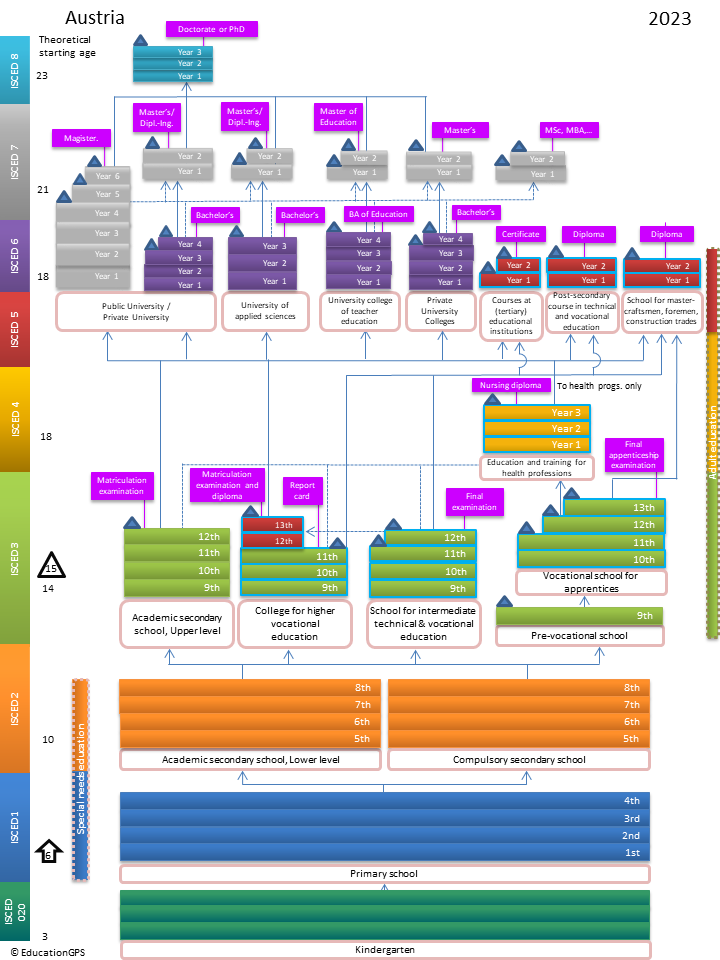
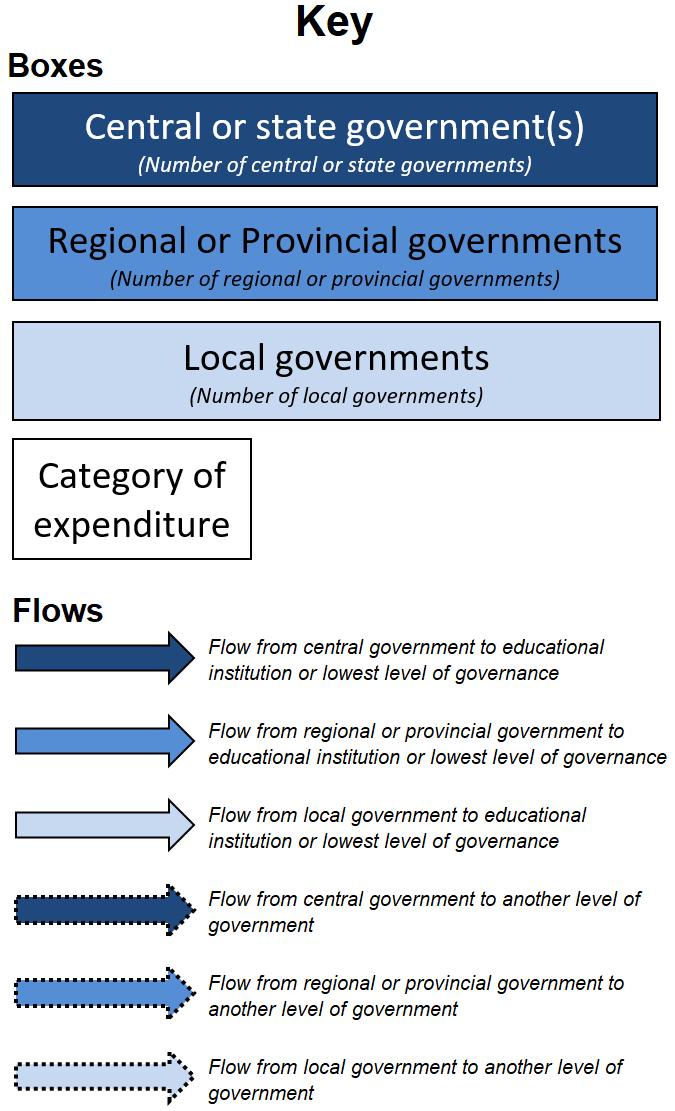
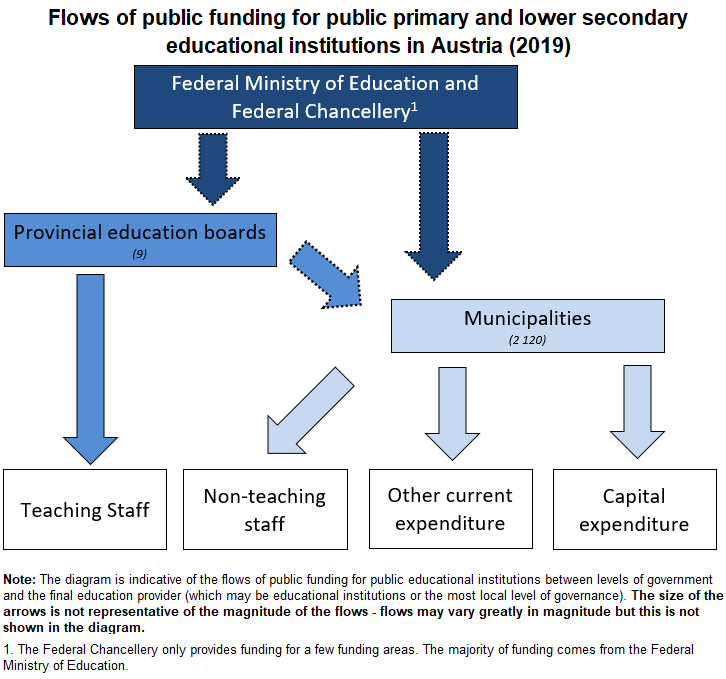
Click on the diagram to get a PDF version
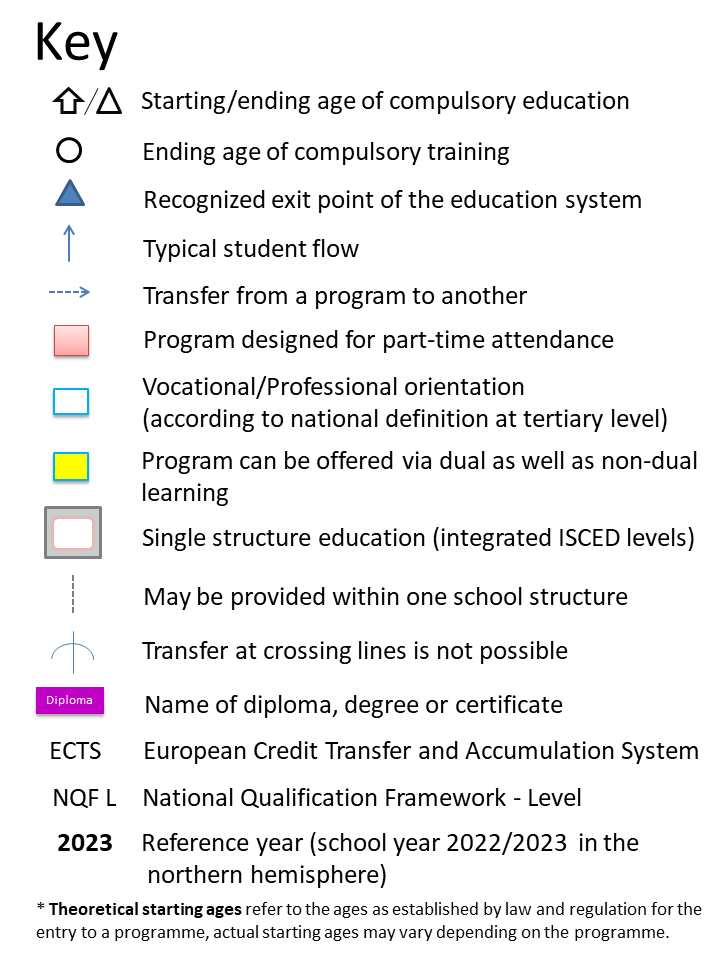
Click on the coverpage to see the full OECD iLibrary version


Note: These values should be interpreted with care since they are influenced by countries' specific contexts and trade-offs. In education, there is often no simple
most- or least-efficient model. For instance, the share of private expenditure in education must be read against other measures designed to mitigate inequities,
such as loans and grants; longer learning time is an opportunity to convey more and better content to students, but may hinder investments in other important
areas. If you want further information on the nature of different variables, please take the time to read the analysis and contextual information, available at the website
for each publication.
All rankings for individual variables are compiled on the basis of OECD and G20 countries for which data are available. The OECD average includes only OECD countries which are listed here: https://www.oecd.org/en/about/members-partners.html
Reference years displayed in the Education GPS correspond to the most common year of reference among countries for which data is available on each variable. Data for the latest available year is preferred and some countries may have provided data refering to a more recent or late year. To know more about possible exceptions on data please click on the "Download Indicator" link on each variable. When a year of reference corresponds to a school year encompassing two years, the reference reads as follows: 2026 for school year 2025/2026.
*TALIS averages are based on all countries participating in the TALIS survey, including partner countries and economies. This explains the difference between the OECD average and the TALIS averages. Data from the TALIS survey and Education at a Glance (EAG) may differ. See Annex E of the TALIS technical report and Annex 3 of EAG 2024 for more details about the data collections.
For additional notes, please refer to annexes in the list of links below the introductory country profile text.
All rankings for individual variables are compiled on the basis of OECD and G20 countries for which data are available. The OECD average includes only OECD countries which are listed here: https://www.oecd.org/en/about/members-partners.html
Reference years displayed in the Education GPS correspond to the most common year of reference among countries for which data is available on each variable. Data for the latest available year is preferred and some countries may have provided data refering to a more recent or late year. To know more about possible exceptions on data please click on the "Download Indicator" link on each variable. When a year of reference corresponds to a school year encompassing two years, the reference reads as follows: 2026 for school year 2025/2026.
*TALIS averages are based on all countries participating in the TALIS survey, including partner countries and economies. This explains the difference between the OECD average and the TALIS averages. Data from the TALIS survey and Education at a Glance (EAG) may differ. See Annex E of the TALIS technical report and Annex 3 of EAG 2024 for more details about the data collections.
For additional notes, please refer to annexes in the list of links below the introductory country profile text.